Conn 10J questions

Tubas, euphoniums, mouthpieces, and anything music-related.
Forum rules
This section is for posts that are directly related to performance, performers, or equipment. Social issues are allowed, as long as they are directly related to those categories. If you see a post that you cannot respond to with respect and courtesy, we ask that you do not respond at all.
Post Reply
funkhoss
Posts: 63
Joined: Sun Aug 16, 2020 4:24 am
Has thanked: 0
Been thanked: 17 times

Conn 10J questions

Post by funkhoss »

I'll start with my two main questions, and then give the backstory behind them for those who care to read it. For those who don't, please feel free to just answer the questions. :smilie8:
  • Does a Conn 10J have usable false tones? Is it possible to play the occasional low E-flat, D or C with a decent sound?
  • How's the high register on a 10J? Does it center and respond well above the bass clef staff?
Now for the backstory: I'm primarily a euphonium player, though most of the playing I've done in public for the last few years has been on trombone. I've also doubled on tuba, for many years primarily on compensating E-flats. The most recent one that I owned was this one that I built/modified, which is the only instrument I've ever sold (and there have been many) that I regret selling. We needed a heat pump, and I wasn't using it much...

However, a couple of years ago I acquired a three-valve compensating B-flat Besson for cheap, and I've built my B-flat chops. I really like the Besson in a number of ways, but I'm beginning to feel that it's too big to be a small tuba, and too small to be a big tuba. So I'm thinking about replacing it with a 6/4 B-flat and a second tuba for smaller/lighter stuff (chamber music, solos, lighter rep, etc.).

It could be logical to get another E-flat as that second tuba. However...recently I subbed in a very good British-style brass band on E-flat tuba. The band lent me a big compensating Besson, and everything went great. After playing nothing but B-flat tuba for a couple of years, coming back to E-flat was super "easy"--great clarity, accuracy, ease of response, etc. Nevertheless, despite enjoying myself and playing well at the gig, I also realized that for better or worse B-flat just "feels" better and more natural for me. Maybe it's because of so many years playing euph and trombone and training my ear that way. I don't know.

(As a side note, I made a similar discovery recently with alto trombone. I owned a great playing E-flat alto trombone for a while, and I got pretty good at playing it. However, I eventually realized that anything I could play on an E-flat alto trombone I could play just as well, and more comfortably, on a small-bore B-flat tenor. So I sold my alto trombone.)

Which brings me to the Conn 10J. I'm wondering if I could find a smaller B-flat tuba that would allow me to play the same sorts of things that I've played on an E-flat in the past. From what I've read online, the 10J has a reputation for:
  • Being nimble to play, yet having a full sound
  • Having excellent intonation
  • Being easy to find and pretty inexpensive to purchase
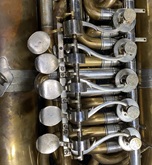
So...what are your thoughts about my two questions above? Could a Conn 10J serve as a passable E-flat substitute?


tubanh84
Posts: 444
Joined: Thu Aug 13, 2020 8:12 am
Has thanked: 66 times
Been thanked: 227 times

Re: Conn 10J questions

Post by tubanh84 »

I think this all depends on what exactly you're going to be playing. Yes, a smaller BBb will be more nimble and sound MORE like an Eb than a bigger BBb would. You're still wrestling with a lot of extra tubing, though. So if you're frequently doing a lot of fast, high passages, really there is no substitute for an Eb or F tuba. If you're generally playing low-to-mid register stuff that sometimes goes higher and sometimes gets fast, the smaller BBb will be fine.

I have a Miraphone 184 CC tuba. Tiny little CC tuba. It does really well in the mid and high register, and it moves very well. But I'd never choose it over my F to play the Vaughan Williams concerto or Czardas, for example. There is a huge difference in sound and feel when I pick up my F tuba. It just flies compared even to the 184.

If you already have a BBb, I would highly recommend pairing it with an Eb or F and get comfortable on the bass tuba.
funkhoss
Posts: 63
Joined: Sun Aug 16, 2020 4:24 am
Has thanked: 0
Been thanked: 17 times

Re: Conn 10J questions

Post by funkhoss »

Let me clarify: I'm not at all "uncomfortable" playing an E-flat tuba. I played only E-flat tuba for many years, and did so pretty successfully.

There's also an economic angle to this question: I can buy a Conn 10J for much less money than I could any compensating E-flat tuba. Given that I don't play tuba that much these days, I'm wondering if the tradeoff would be worth it. It would be mainly for chamber music, not virtuosic solos.
User avatar
arpthark
Posts: 5772
Joined: Mon Aug 24, 2020 4:25 pm
Has thanked: 1774 times
Been thanked: 1912 times

Re: Conn 10J questions

Post by arpthark »

I think the 10Js are great. I had one pass through here a couple years ago and I sold it to another trombone/euph player as a double.

Their sound belies their size. They do have a pretty big bell and a not-small bore. More 7/8 than 3/4 size but they pretty much can do it all. I think they sound a bit better than the O-99 but are a bit fluffier sounding due to the larger bell.

I remember false tones coming out fairly well but it’s been a while.
These users thanked the author arpthark for the post:
catgrowlB (Tue Feb 17, 2026 7:01 pm)
User avatar
bloke
Mid South Music
Posts: 24364
Joined: Thu Aug 13, 2020 8:55 am
Location: western Tennessee - near Memphis
Has thanked: 5225 times
Been thanked: 5887 times

Re: Conn 10J questions

Post by bloke »

Good tuba.

The predecessor was from the Pan American series.

' might be an interesting tuba to grab one of those .728" bore Weril 4-valve valvesets, have it rebuilt, and stick it on a 10J body as a front action.
catgrowlB
Posts: 318
Joined: Tue Jun 13, 2023 8:46 pm
Has thanked: 296 times
Been thanked: 124 times

Re: Conn 10J questions

Post by catgrowlB »

The Conn 10j -- and predecessor/earlier versions -- are 7/8 tubas with a body size/girth that is slightly smaller than 'Monster' Eb bodies & bells, but definitely larger than typical 3/4 contrabass tubas. 18" bell, .695" valveset bore -- slightly larger than .687" King valveset bore size.
I think it is great for a 7/8 contrabass.

I have the Elkhart Band Inst. version, which is like the Pan American version, and about the same 1920s-1930s vintage. I find they play with an easy upper register and good low register, if slightly 'tight'. Decent false tones, very good intonation, and a deep, beefy, round sound for its size. They are fun tubas that play great and can sound like full 4/4 tubas :cheers:
funkhoss
Posts: 63
Joined: Sun Aug 16, 2020 4:24 am
Has thanked: 0
Been thanked: 17 times

Re: Conn 10J questions

Post by funkhoss »

Thanks for the feedback, everyone. It sounds like a 10J might be worth trying.

If I get one and end up liking it, one modification possibility could be to find a three-valve compensating E-flat B&H/Besson for cheap, lengthen the valve circuits to B-flat length, and swap the valves onto the 10J. The valve bore of a B&H E-flat tuba is very close to the size of the Conn valves. That would solve the third valve tuning issues without adding more valves.

Then if the 10J bell and the B&H bell were made detachable and interchangeable, one could play the 10J with either the original 18" bell or a 15" bell, making the instrument even more versatile. Theoretically, this could all be done for around $1000 with some patience. Hmm...
User avatar
bloke
Mid South Music
Posts: 24364
Joined: Thu Aug 13, 2020 8:55 am
Location: western Tennessee - near Memphis
Has thanked: 5225 times
Been thanked: 5887 times

Re: Conn 10J questions

Post by bloke »

If the York and Holton 32-inch tall 19-inch bell tubas are 4/4, those Conn instruments certainly are as well.
York-aholic
Posts: 1827
Joined: Thu Aug 13, 2020 10:39 pm
Location: SoCal
Has thanked: 2371 times
Been thanked: 686 times

Re: Conn 10J questions

Post by York-aholic »

I’ve often thought a 10j might be a good candidate for a front action “flip” with King valves. But that’s a lot of work. However, I’ve kept my eye open for a well priced non-beater to pop up locally.

Haven’t found it yet…
Some old Yorks, Martins, and perhaps a King rotary valved CC
User avatar
bloke
Mid South Music
Posts: 24364
Joined: Thu Aug 13, 2020 8:55 am
Location: western Tennessee - near Memphis
Has thanked: 5225 times
Been thanked: 5887 times

Re: Conn 10J questions

Post by bloke »

I'm thinking the bore size is .695", which is a good bit larger than a King bore size, which is why I thought an old but rebuilt Dynasty .728" bore four valve sousaphone valve section (sort of available, because these sousaphones tended to come apart into pieces due to sort of flimsy bracing) might be a good thing to stick on one of those.

The Europeans have totally ignored everything other than 19mm.

I believe the 10J shows us that something closer to .700" can work remarkably well instruments that aren't gigantic.

I was personally disappointed in the playing characteristics of the last thing that Holton ever made which they labeled "Harvey Phillips", but those instruments used the same bore size as much earlier Holton instruments of the same approximate size - which is .665" - a tubing size that telescopes down from (yep) .750".

...so yes, the outside slide tubing on these instruments was the same as the inside slide tubing on the great big Holton instruments.
York-aholic
Posts: 1827
Joined: Thu Aug 13, 2020 10:39 pm
Location: SoCal
Has thanked: 2371 times
Been thanked: 686 times

Re: Conn 10J questions

Post by York-aholic »

bloke wrote: Thu Feb 19, 2026 8:27 am I'm thinking the bore size is .695", which is a good bit larger than a King bore size, which is why I thought an old but rebuilt Dynasty .728" bore four valve sousaphone valve section (sort of available, because these sousaphones tended to come apart into pieces due to sort of flimsy bracing) might be a good thing to stick on one of those.
I won’t say that a 10j wouldn’t play better with .728” v versus .687” bore valves but…

King = .687”
Conn 10j =. .695”
Dynasty =. .728”

There’s only a .008” difference between the King and Conn. Conn to Dynasty is a .033” difference…

I was just thinking King since the closer bore size might mean less adapting to make parts fit but I dunno.

Also the Dynasty sousaphone valves, being on a diagonal to the tubing, might take up more room (side to side) than a 10j has available. Again, dunno, never held a 10j.

10j might very well benefit from a bit larger bore.
These users thanked the author York-aholic for the post:
bloke (Thu Feb 19, 2026 9:45 pm)
Some old Yorks, Martins, and perhaps a King rotary valved CC
User avatar
bloke
Mid South Music
Posts: 24364
Joined: Thu Aug 13, 2020 8:55 am
Location: western Tennessee - near Memphis
Has thanked: 5225 times
Been thanked: 5887 times

Re: Conn 10J questions

Post by bloke »

No disagreement.

To stay in the same general topic area...

I have one of those four valve larger bore Jupiter sousaphones here and all four connecting points failed (imagine that) whereby the valve section is completely free of the instrument.

Those are .736" bore. I wonder where they came up with that size.

The thing about the Jupiter 4-valve section, though, is that it's wrapped up really quite neatly into a box, and nothing extends past the back valve caps. It seems like one of those valve sections would be really easy to install on some old good playing three valve top action tuba that someone turned around the other way, and to install without many complications.
These users thanked the author bloke for the post:
York-aholic (Fri Feb 20, 2026 6:50 am)
Post Reply