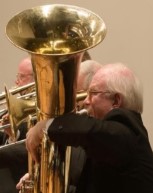
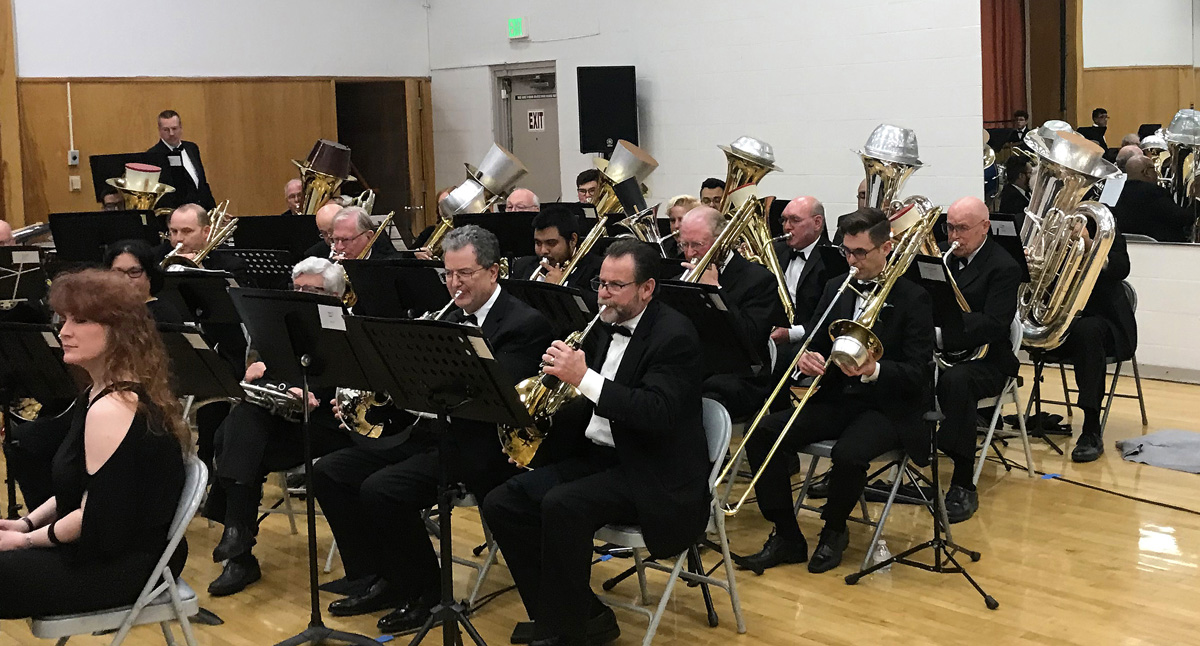
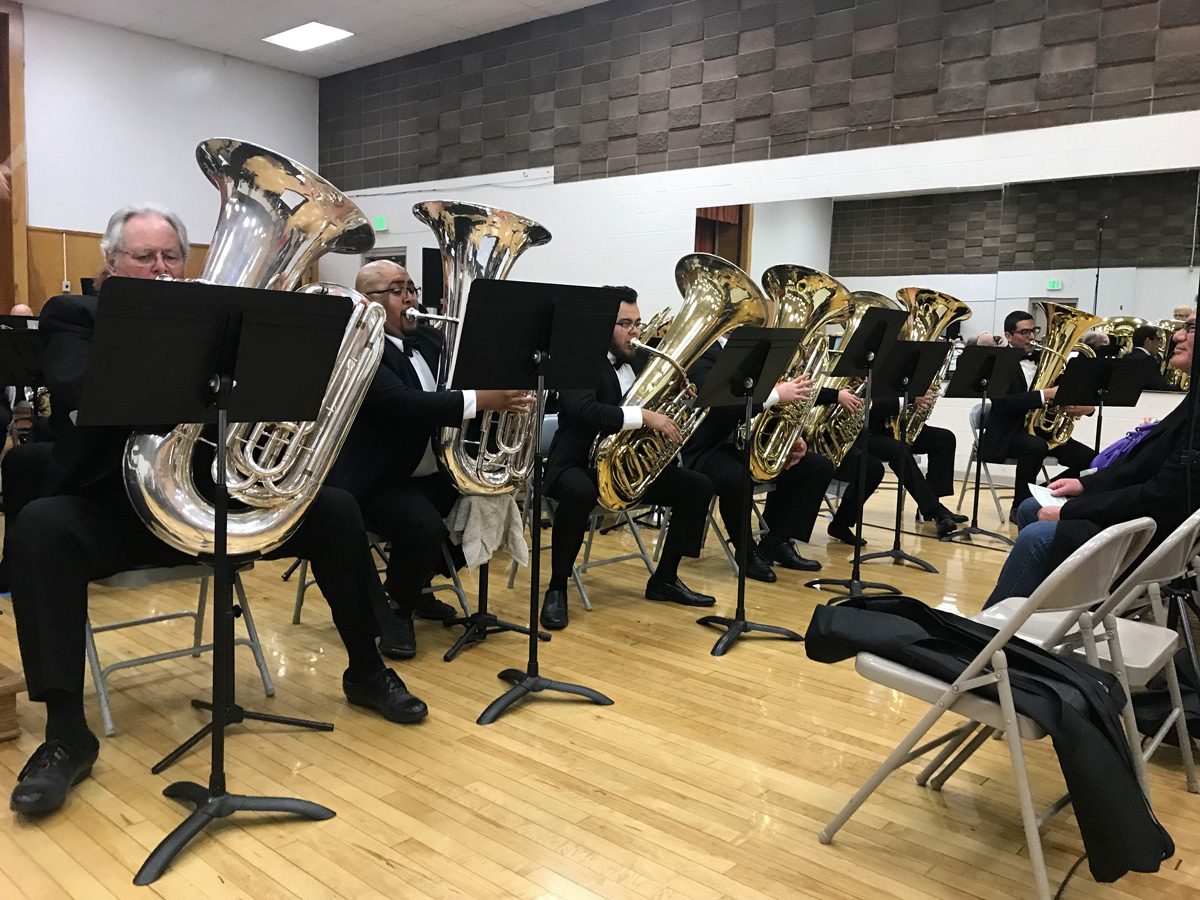
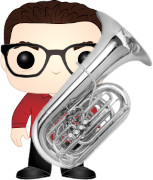
Below is a photo of my section for the 45 years I performed. I am not meaning to be egotistical. As one who was symphonically trained for orchestral playing, I expected to be the only player of my instrument.
In the orchestra, part of playing the tuba as it is with playing all other instruments, one must listen, blend with and support others no matter where the music travels through a composition. The tuba is an instrument of diverse possibilities in the color palette available to the great symphonic composers of past, present and future. Throughout my years of playing, I have found the tuba included in many diverse sonic instrumental combinations, some of which that my feeble, 75-year-old brain can remember are listed below:
- With the low strings stating the main theme in the first movement of Prokofiev's 5th Symphony
- Playing with the trombones in the chorale at the end of the last movement of Tchaikowsky' 6th Symphony
- Sounding the Dies Irae with the second tuba, low woodwinds and low strings in the Symphony Fantastique, by Berlioz
- Playing a melodic soli, many octaves apart, with the piccolo in Charles Ives' "Variations on America"
- Solo passages for tuba in Gershwin's "An American in Paris", Stravinsky's "Petrushka" as well as solo passages in Gustav Mahler's Symphonies 1 and 5.
I did much free-lance playing as well. When I am introduced to new people and they find out that I played the tuba and horn (yes, I also studied and played horn as a secondary instrument), I am always asked, "For whom did you play?" My answer to that is, "...for whoever was on the other end of the phone call at the time." In addition to holding a position in a minor symphony orchestra for a while, over the years I also played with other symphony orchestras as a substitute or extra, a circus band, show pits, ethnic bands, Dixieland (which is far from my strong suit), summer park concert bands, as well as a tuba quartet, brass quintets and large brass ensembles.
My point of this dissertation is to say that, as a tuba player, expect to be the only player of your instrument. But also know that a
MAJOR part of playing is to fit in and blend with others sonically and stylistically no matter what diverse musical performance situation faces you in any given day. The tuba is your tool. Once you fully master your tool's use, you can then use it for everything. As I have told many private students over the years,
"Just go prepared to play the tuba!"/u]
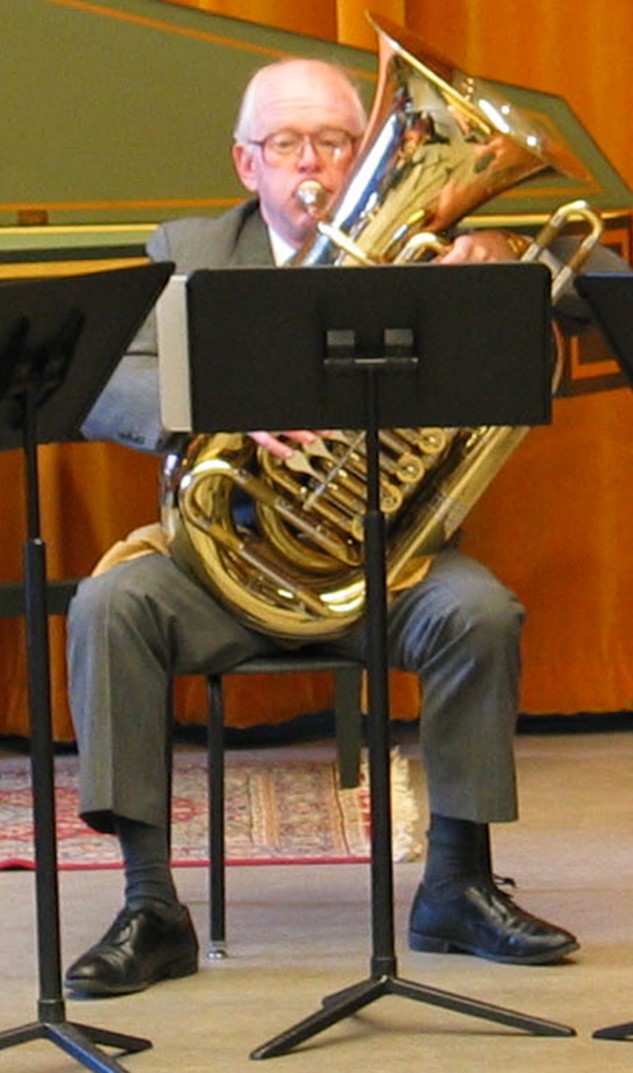
- My Section.jpg (124.99 KiB) Viewed 874 times
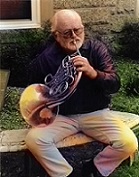
- Randy with horn Color Cropped - 177 x 140.jpg (15.08 KiB) Viewed 874 times




 (She was the trophy wife of a FedEx pilot - at that time, called "Federal Express".)