School Me on Aftermarket Rotary Linkage

Projects, repair topics, and Frankentubas
Post Reply
User avatar
tubatodd
Posts: 394
Joined: Sun Dec 27, 2020 5:47 pm
Has thanked: 526 times
Been thanked: 175 times

School Me on Aftermarket Rotary Linkage

Post by tubatodd »

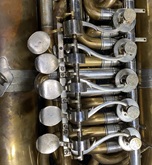
I just acquired a Rudy 4/4 CC tuba. It's the second rotary tuba I've owned (of 3) that came from the previous owners with Dubro #259 4-40 RC car linkages. These seem to be a popular choice as a replacement for tuba linkages. The ones I have seem to be in decent shape, although I don't know how long these plastic pieces typically last.

Image

As someone who likes to tinker and customize my instruments (most of my electric basses have swapped/upgraded hardware, pickups, pickguards or all of the above) to my liking, I am compelled to see what options are out there that are proven quality alternatives to this particular Dubro linkage. Are there any easily available metal linkages that are a drop-in replacement?

Something like this?
https://www.amazon.com/uxcell-Linkage-J ... B07Q2ZS8HQ


What about the fully enclosed plastic + metal options, like this?

https://www.dubro.com/products/swivel-b ... 1G-1h8atAy

Amazon and RC shops seem chock full of potential options, but I have no idea how many of them are a) a proper fit b) work smoothly c) work reliably d) worth considering.


Todd Morgan
Besson 995
Rudy Meinl 4/4 CC
Mr. P 5.0
User avatar
arpthark
Posts: 5772
Joined: Mon Aug 24, 2020 4:25 pm
Has thanked: 1774 times
Been thanked: 1912 times

Re: School Me on Aftermarket Rotary Linkage

Post by arpthark »

tubatodd wrote: Sat Apr 26, 2025 9:14 am The ones I have seem to be in decent shape, although I don't know how long these plastic pieces typically last.
Anecdotal, but Dubro seems to last forever. I have a Piggy that was converted to black plastic Dubro sometime in the 80s or early 90s, has been played regularly, and the linkages are still silent. I know @bloke has had them on his Symphonie F for about a million years, too, but I don’t know if he’s ever swapped them out.
These users thanked the author arpthark for the post:
tubatodd (Sat Apr 26, 2025 10:31 am)
User avatar
tubatodd
Posts: 394
Joined: Sun Dec 27, 2020 5:47 pm
Has thanked: 526 times
Been thanked: 175 times

Re: School Me on Aftermarket Rotary Linkage

Post by tubatodd »

arpthark wrote: Sat Apr 26, 2025 10:27 am Anecdotal, but Dubro seems to last forever. I have a Piggy that was converted to black plastic Dubro sometime in the 80s or early 90s, has been played regularly, and the linkages are still silent. I know @bloke has had them on his Symphonie F for about a million years, too, but I don’t know if he’s ever swapped them out.
That's good to know. I know plastic parts in vehicles get brittle over time. I wonder if the regular oiling of these Dubro pieces result in them lasting longer.
Todd Morgan
Besson 995
Rudy Meinl 4/4 CC
Mr. P 5.0
User avatar
bloke
Mid South Music
Posts: 24364
Joined: Thu Aug 13, 2020 8:55 am
Location: western Tennessee - near Memphis
Has thanked: 5225 times
Been thanked: 5887 times

Re: School Me on Aftermarket Rotary Linkage

Post by bloke »

I've had 12 of those specific DuBro links on my F tuba for at least thirty-five years, and they're absolutely silent.
These users thanked the author bloke for the post:
arpthark (Sat Apr 26, 2025 11:36 am)
User avatar
tubatodd
Posts: 394
Joined: Sun Dec 27, 2020 5:47 pm
Has thanked: 526 times
Been thanked: 175 times

Re: School Me on Aftermarket Rotary Linkage

Post by tubatodd »

bloke wrote: Sat Apr 26, 2025 11:01 am I've had 12 of those specific DuBro links on my F tuba for at least thirty-five years, and they're absolutely silent.
No doubt! The ones on my Rudy are silent as well. The only noise are from the rather hard bumper material that was installed.
Todd Morgan
Besson 995
Rudy Meinl 4/4 CC
Mr. P 5.0
tadawson
Posts: 179
Joined: Thu Jun 20, 2024 9:32 pm
Has thanked: 58 times
Been thanked: 51 times

Re: School Me on Aftermarket Rotary Linkage

Post by tadawson »

IIRC, the DuBro ball links are nylon, not plastic, and tend to hold up well. Consider also that normal R/C use has them moving more, faster, under a greater load, and in a far dirtier environment that I would expect to find on a horn.Couple that with the inability to forget to lubricate them, and seems like a good option from here. (I also fly large (60" plus rotors) R/C helicopters, and that is my point of comparison. These are all over the flight control systems, and under orders of magnitude more stress and motion).
These users thanked the author tadawson for the post:
tubatodd (Sat Apr 26, 2025 1:43 pm)
1977(ish) Mira"fone" 186
User avatar
tubatodd
Posts: 394
Joined: Sun Dec 27, 2020 5:47 pm
Has thanked: 526 times
Been thanked: 175 times

Re: School Me on Aftermarket Rotary Linkage

Post by tubatodd »

I just realized that I neglected to clearly state my main point. Doh!

Yes, the Dubro #259 4-40 linkages are proven.
Yes, the Dubro #259 4-40 linkages do hold up over time.
Yes, the Dubro #259 4-40 linkages are easily accessible.
Yes, the Dubro #259 4-40 linkages were documented as a tuba linkage replacement by Rick Denney back in the day.

But....

Why is it that, of all of the linkages available from Dubro and other non-OEM brands, that it is this exact linkage that I've seen 100% of the time for tubas?

Are these the only ones that fit?
Are these the only ones that work for use on a tuba?
Is it the screw at the end of the linkage? (ie finer adjustment)
Availability? (ie hanging up in every hobby shop)
Limited availability of other non-OEM linkages?
Just hadn't tried anything else?
Other non-OEM linkages were proven to not work?
Other non-OEM linkages were proven to be problematic?
Arnold Jacobs used the Dubro #259 and so they are sacrosanct? (this is purely a joke)
Todd Morgan
Besson 995
Rudy Meinl 4/4 CC
Mr. P 5.0
User avatar
arpthark
Posts: 5772
Joined: Mon Aug 24, 2020 4:25 pm
Has thanked: 1774 times
Been thanked: 1912 times

Re: School Me on Aftermarket Rotary Linkage

Post by arpthark »

I’ve seen folks on the web (frankentuba FB group and elsewhere) use metal linkages from Amazon on their projects. Knowing the track record of clacky Chinese tuba linkages, I’d be curious if those held up over time, and if they are as noiseless as Dubro can be.
User avatar
tubatodd
Posts: 394
Joined: Sun Dec 27, 2020 5:47 pm
Has thanked: 526 times
Been thanked: 175 times

Re: School Me on Aftermarket Rotary Linkage

Post by tubatodd »

arpthark wrote: Mon Apr 28, 2025 4:47 pm I’ve seen folks on the web (frankentuba FB group and elsewhere) use metal linkages from Amazon on their projects. Knowing the track record of clacky Chinese tuba linkages, I’d be curious if those held up over time, and if they are as noiseless as Dubro can be.
I just recently joined that group. I probably should check that out. I was also curious why I've not seen other Dubro linkages. If one of their products has been the gold standard, I wonder why I haven't seen others. Perhaps that FB group will have some examples and feedback.
Todd Morgan
Besson 995
Rudy Meinl 4/4 CC
Mr. P 5.0
User avatar
tubatodd
Posts: 394
Joined: Sun Dec 27, 2020 5:47 pm
Has thanked: 526 times
Been thanked: 175 times

Re: School Me on Aftermarket Rotary Linkage

Post by tubatodd »

After my Rudy was recently worked on, my repair tech did some measuring of the parts and the threads of the linkage that is presently installed.

This was her findings.
Image

I did some minimal research and ended up buying these, Dubro 2263.
Image

The logic was that the Dubro 259, which is already on the horn, is also a 4-40 linkage. What I found out was....wellllll.....it's not that simple and Katy's numbers don't lie.

The 2263 was a drop-in replacement for the 2nd valve kicker. They did great. As for the valves, it appears the reason the Dubro 259 was selected (and perhaps why we see them on most conversions) is because the metal bead appeared to be swapped for the actual bead that was on the horn. At least that's the way it appeared. If that was not the case, then the bead was modified to have a larger hole. The 6-32 screw did NOT go through the 4-40 bead (DuH!) of the 2263.

So...I decided to make friends with what was already installed. I checked each link end to make sure the retaining screw wasn't too tight and adjusted accordingly. That seemed to make things a bit quicker. It appears there were mismatched screws on the linkages. Definitely a weekend-warrior project or a "Hold my beer" install.

So there it is. I got a bag of 10 Dubro 2263's with retaining screws sitting in a drawer.
Todd Morgan
Besson 995
Rudy Meinl 4/4 CC
Mr. P 5.0
Matt Good
Posts: 21
Joined: Sat Jun 19, 2021 9:27 am
Has thanked: 1 time
Been thanked: 17 times

Re: School Me on Aftermarket Rotary Linkage

Post by Matt Good »

tubatodd wrote: Sat Apr 26, 2025 9:14 amThe ones I have seem to be in decent shape, although I don't know how long these plastic pieces typically last.
I have had them for decades without any problems.
These users thanked the author Matt Good for the post:
tubatodd (Fri Jun 20, 2025 6:04 am)
User avatar
bloke
Mid South Music
Posts: 24364
Joined: Thu Aug 13, 2020 8:55 am
Location: western Tennessee - near Memphis
Has thanked: 5225 times
Been thanked: 5887 times

Re: School Me on Aftermarket Rotary Linkage

Post by bloke »

I might use the non-adjustable Dubro, but - when I first put them on my instrument - I was hoping to have them last (as they have) for several decades.
Knowing that even the expensive European-made metal-to-metal links eventually click, I sort of thought I would purchase the adjustable Dubro links and -every once in a long while - turn the little screw (as I sometimes do, but sometimes when I do that, I find it a minute or two later that I should have just left it alone. :laugh: )

typical bloke change of course / sidebar / stream of consciousness crap:
Most of the noise associated with rotors is vertical bearing wear.
It's possible to remedy this long-term, but only a few shops are willing to - or know to - do this. With the type of bearing plates that feature a lip, this can actually be remedied with nothing more than a fine toothed wide saxophone tone hole file. With plain cylindrical bearings like a Miraphone, it requires very basic lathe work. I can measure how much they've worn overtime with the crappiest Chinese 1/1000ths-of-an-inch dial calipers. It's not complicated: I set up the calipers on the outside of the valve casing with the bearing hammered in as far as it will go and measure the distance from the bottom of the casing to the top of the rotor stem with the rotor sitting down as far as it will sit down into the casing. Next, I take my finger and I push the rotor up as far as it will go from the bottom stem and re-measure. The difference is however much needs to be filed off of the bottom of a casing whereby the bearing plate has a lip, or buzzed off of the edge of the interior surface of a miraphone style bearing plate when it's mounted on a lathe gently... Even if no collet that fits... Because even if the jaws of the lathe swedge the bearings opening down a little bit, that is usually worn anyway and it often doesn't hurt, and if it does it barely too much, it can instantly be refit with some lava soap suds and some valve oil.

This stuff does require some precision, but precision doesn't always require fancy tools... and watching thousandths of an inch disappear doesn't require a lot more attention to detail than watching 16ths of an inch disappear when doing good carpentry work... or 64ths of an inch disappear when doing fine cabinetry work.

:smilie6:
.
Post Reply